Cosmetic Bathroom Update
$15,000 – $20,000
That’s the question on all homeowners minds when considering a home remodel. Remodeling and construction pricing isn’t one-size-fits-all. Scope, existing conditions, finish level, and permitting requirements all influence what a project will cost. Every home in Kitsap County and the greater Puget Sound region is different, which means every project carries its own set of variables.
The examples below are based on recent local projects and are intended to provide practical planning ranges, not fixed quotes. Our goal is to give you a realistic starting point so that conversations about your project are clear, informed, and productive from the beginning.
Before considering pricing examples, it's important to understand how your priority focus influences overall cost. Every emodeling project balances three factors: Timeline, Quality, and Budget. Explore how shifting your priorities shapes the scope, timeline, and investment of your project.
When all three priorities are weighted evenly, you have the most flexibility in how your project takes shape. This balanced approach typically lands in the mid to upper-mid cost range, with standard to upgraded materials, a reasonable timeline, and room to adjust as the scope develops. Most projects begin here and shift as priorities become clearer during pre-construction.
Below are sample planning ranges organized by project type. These categories are meant to help you identify where your project might fall based on scope and finish level. Within each category, you’ll see how complexity, material selection, and structural changes can influence overall investment.
The ranges below are planning ranges based on recent local projects in the Seattle / Kitsap County region. Every bathroom is different, and final pricing depends on scope, existing conditions, and finish selections.
$15,000 – $20,000
$35,000 – $60,000+
$70,000 – $120,000+
The ranges below are planning ranges based on recent local projects in the Seattle / Kitsap County region. Every kitchen is different, and final pricing depends on scope, existing conditions, and finish selections.
$25,000 – $40,000
$40,000 – $120,000+
$150,000 – $300,000+
The ranges below are planning ranges based on recent local projects in the Seattle / Kitsap County region. Interior work varies widely based on the number of trades involved, finish selections, and whether changes extend beyond cosmetic updates.
$25,000 – $60,000+
$25,000 – $65,000+
This section provides a planning range for builder-grade new construction (structure only; land excluded). It's meant to offer useful context for early budgeting—not a quote. Final pricing depends on scope, finish selections, and project complexity.
$290–$350 per sq. ft.
Square-foot ranges work best when comparing similar homes with similar finishes. Builder-grade construction follows predictable patterns—standard framing, simple rooflines, and production-level materials—making cost-per-square-foot a useful benchmark.
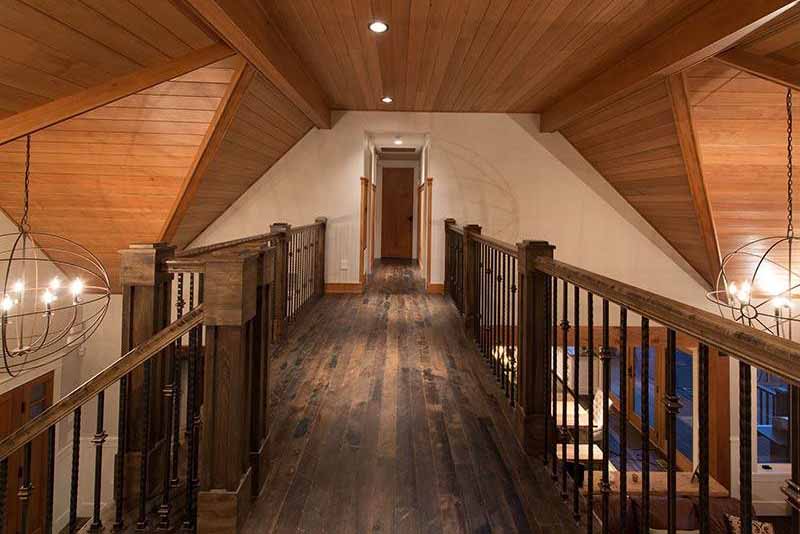
Premium and custom builds don't follow the same rules. A home with vaulted ceilings, custom millwork, high-performance systems, and architect-designed details requires more coordination, longer lead times, and higher-quality materials at every phase. Applying a single per-square-foot number to this level of work oversimplifies the estimate and often leads to misaligned expectations.
For premium construction, the most accurate path forward is defining scope and selections during pre-construction—then building a detailed estimate based on what the project actually requires.
If you're aiming for premium finishes or a highly customized build, the best next step is defining priorities and selections early—allowing the project scope and budget to be developed accurately during pre-construction.
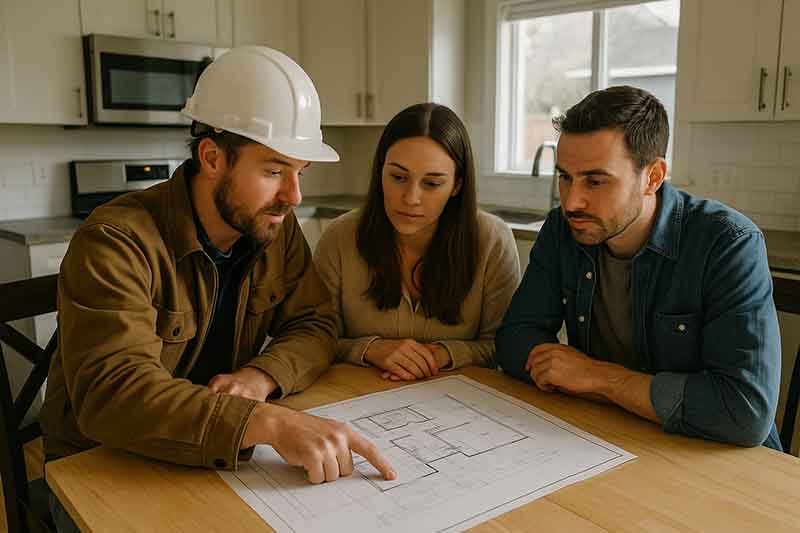
Every remodeling project is influenced by a wide range of variables, many of which aren't fully visible at the start. Existing conditions, material choices, design decisions, permitting requirements, and site constraints can all affect scope, timeline, and cost. Pre-construction is where we address those factors before they become surprises.
Remodeling and construction pricing is influenced by many variables, but your final investment is not arbitrary. It is shaped by the decisions we make together. During pre-construction, we work collaboratively to identify what matters most to you. By clearly defining priorities early, we can allocate resources intentionally toward the elements that matter most, while selecting more budget-conscious options where they’re less critical.
Every home is different. These variables commonly impact scope and overall investment. Pre-construction allows us to identify and plan for them intentionally rather than discovering them mid-project.

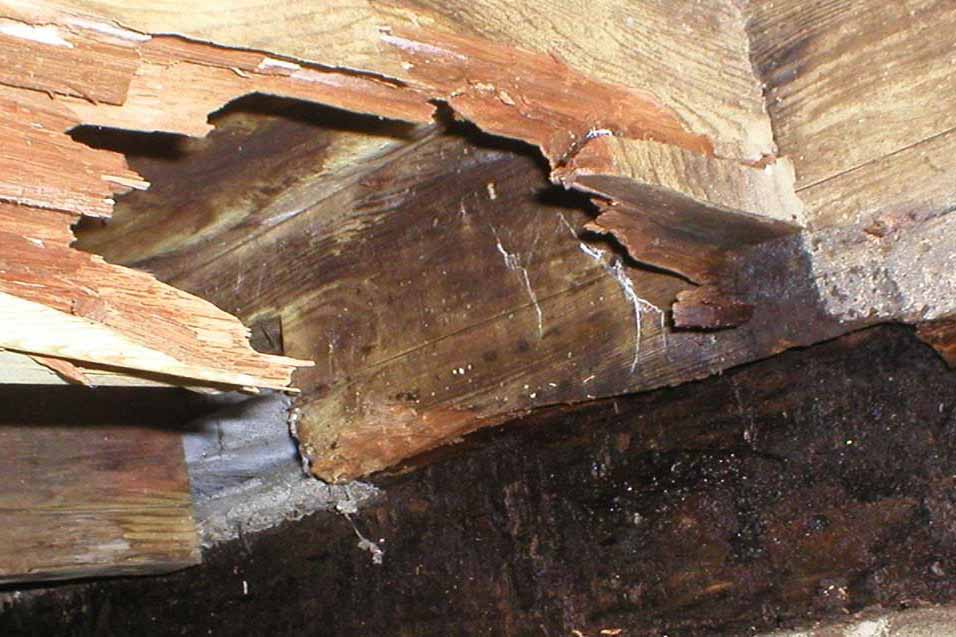
Rot, moisture damage, or structural deficiencies uncovered during demolition are among the most common sources of scope change. Pre-construction site evaluations help identify potential issues before walls are opened.
Older homes often require plumbing, electrical, or mechanical system upgrades to meet current building codes. These updates are easier to plan for when identified during pre-construction rather than after demolition begins.
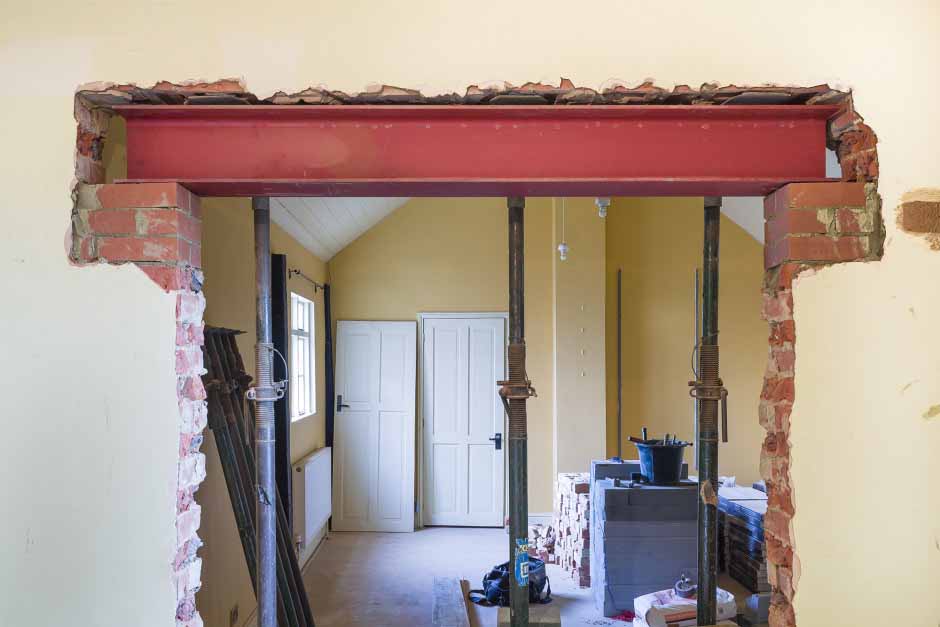
Layout modifications, load-bearing wall removals, or additions to the original scope affect both timeline and cost. Pre-construction planning helps define these decisions on paper first.
Premium finishes, custom materials, and upgraded fixture packages all influence pricing. Making these selections during pre-construction leads to more accurate budgeting and fewer change orders.
Inspection requirements, jurisdictional code upgrades, and permitting timelines vary by municipality. Pre-construction includes coordination with local authorities to anticipate these requirements early.
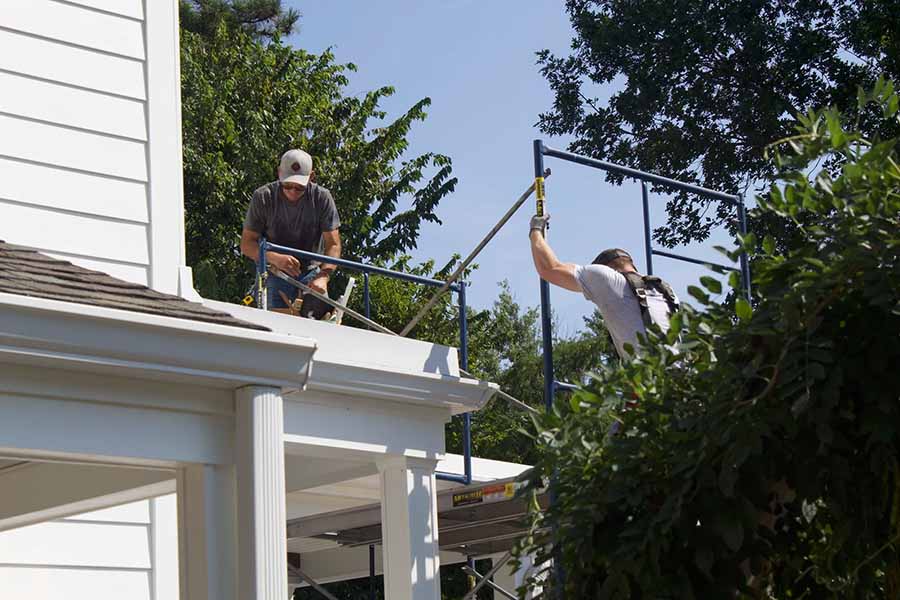
Limited access, tight staging areas, and challenging site conditions can reduce construction efficiency and extend timelines. Evaluating these constraints early allows for better scheduling and cost projections.
In some cases, a larger vision can be thoughtfully divided into well-planned phases. The goal is not to reduce the quality of the final outcome, but to sequence the work intelligently so that each phase is financially feasible while preserving the long-term plan.
Not every element of a project needs to happen at the same time. Some work is most cost-effective when completed together, while other elements can be deferred without increasing long-term cost, as long as proper planning is done upfront.
Some elements are most cost-effective when done at the same time, because the conditions are already right:
Other elements can be deferred to a later phase without increasing long-term cost:
The key is avoiding situations where completed work must later be undone or reversed, which increases overall cost. Through thoughtful planning, we establish natural stopping points that preserve your long-term vision while keeping the current phase on budget. You can still achieve your ideal remodel. Sometimes it simply requires sequencing the investment in a way that aligns with your current resources and future plans.
Be cautious of pricing that appears unusually low without a clearly defined scope. When a project moves forward without fully understanding what's included, costs often surface later as change orders, increasing the true investment well beyond initial expectations. A well-defined scope creates clarity around what is included, what is not, and what the agreed-upon investment truly represents.
Based on conversations with real Kitsap County homeowners
Here are some common questions and concerns that we hear from homeowners in Kitsap County. We hope these will be helpful as you consider your project.
Reach out to us and we would be happy to answer any additional questions you may have!
This usually means there isn’t yet a clear framework for construction costs. Remodeling pricing varies widely based on scope, existing conditions, and finish level, and many online averages or past experiences no longer reflect current market conditions.
Through the pre-construction process, we work together to define a scope that aligns with both your goals and your budget. This conversation is about education and clarity, not pressure.
This often means a budget exists, but it hasn’t yet been tied to a specific scope of work. One of the most effective ways to approach a project is to establish a target budget first, then shape priorities around what matters most.
In many cases, adjusting scope, sequencing, or finish selections can bring a project closer to a desired range without compromising what’s most important to you.
Room size alone isn’t a reliable indicator of cost, especially in remodeling. Smaller spaces like bathrooms often require the same trades, sequencing, waterproofing, and inspections as larger rooms, which can make them surprisingly complex.
Pricing is driven more by systems, finishes, and existing conditions than square footage.
This usually reflects a desire for transparency, not discounts. A significant portion of remodel costs comes from skilled labor, careful coordination, and the time required to do the work correctly.
We believe in compensating our team fairly and building projects that we can confidently stand behind long after completion. When homeowners understand how costs are allocated, it often becomes a trust-building moment.
Online averages, DIY articles, and home-remodel TV shows rarely reflect real-world conditions, local labor markets, or the complexity of individual homes.
Every company operates differently, and pricing varies based on experience, overhead, and long-term accountability. Our goal is to provide realistic planning ranges based on recent local projects so homeowners can make informed decisions.
That’s exactly what the pre-construction process is designed for. Whether you’re planning to live in your home long-term or preparing it for resale, budget strategies can vary significantly.
In some cases, remodeling may not be the best option at all — and part of our role is helping you understand that so you can make the right decision for your situation.
That’s a normal and thoughtful part of the process. We encourage homeowners to gather information and understand their options.
Often, early conversations are about gaining perspective rather than making immediate decisions. We’re always happy to answer questions and help clarify what’s realistic, whether or not we’re ultimately the right fit.
This usually opens the door to a productive conversation about priorities rather than shortcuts. Reducing cost typically means adjusting scope, materials, or sequencing — not compromising quality.
Pre-construction allows these decisions to happen on paper, where changes are far more efficient and cost-effective than making adjustments during construction.
Square-foot pricing can be a helpful planning tool for new construction, but it rarely reflects the realities of remodeling. Remodel costs are driven less by size and more by scope, existing conditions, systems, and finish level.
Two spaces with the same square footage can have very different costs depending on what’s behind the walls, how much needs to change, and how the work is sequenced. For that reason, we focus on scope and priorities rather than relying on a single price-per-square-foot number.
Time-and-materials pricing has a place in remodeling, but it’s not ideal for defining an entire project upfront. Used broadly, it can make budgeting difficult and create uncertainty around total cost.
Where it does make sense is for unforeseen conditions discovered during demolition or for change orders that arise once work is underway. In those cases, time-and-materials allows the project to keep moving without delays, while still maintaining transparency and documentation.
If you’re considering a remodel or new construction project, the next step is a conversation. We’ll talk through your goals, budget range, and priorities to help you decide how you want to move forward. No pressure and no obligation.
Full service remodel and construction contractor serving Kitsap County